
Gombe adds 17mw of solar capacity
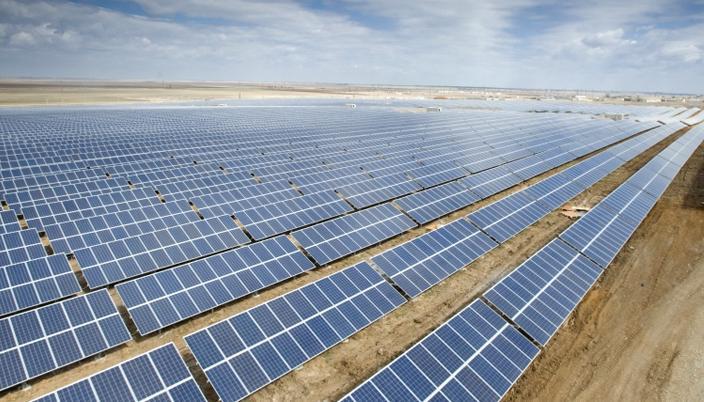
Nigeria commissioned a 1-megawatt solar mini-grid with battery storage in the northeastern state of Gombe and began work on 16 more megawatts.
Officials are betting that decentralised power can do what the national grid hasn’t: reach rural enterprises that have been held back by unreliable or absent electricity.
The Rural Electrification Agency and the Ministry of Power switched on the Talasse project in Balanga Local Government Area on Saturday. The plant is paired with a 2.3-megawatt battery energy storage system and is designed to serve 6,028 connections. Together with the 16 megawatts flagged off across four other communities, Gombe gains 17 megawatts of solar capacity.
The Talasse mix is notable. Of the connections, 5,929 are residential, 84 are commercial and 15 are earmarked for productive uses such as processing and other income-generating activity. The agency says the design is deliberate: it wants projects built around the full range of local demand rather than households alone.
“Electricity access must be understood not merely as the provision of power, but as an enabler of economic opportunity,” Abba Aliyu, the agency’s managing director, said at the ceremony.
Four more sites
Joseph Tegbe, minister of power, said work began on four interconnected mini-grids with a combined planned capacity of 16 megawatts in Dukku, Bajoga, Kumo and Kaltungo. Aliyu said the agency would move on to Kaltungo for the groundbreaking after the Talasse ceremony.
The Talasse plant was developed by Mids Dynamics Limited. Tegbe thanked the company, the agency and the Gombe State government for their roles.
Tegbe linked the Gombe event to similar commissionings in Kwara State, the Federal Capital Territory and, most recently, Oyo State. He framed the run of projects as part of President Bola Tinubu’s Renewed Hope Agenda, saying renewable power was “spreading across Nigeria with unmistakable momentum.”
Read also:Electricity woes drive sevenfold jump in solar company registrations
Why mini-grids
Mini-grids are small, self-contained power networks that can run alone or connect to the main grid. For communities far from transmission lines, they can be built faster than a grid extension. Battery storage, as at Talasse, lets a solar plant keep supplying power after sunset, which matters for shops, cold storage and workshops that run into the evening.
Tegbe pointed to the everyday users he expects to benefit: farmers processing produce closer to home, traders preserving perishable goods, artisans powering equipment and young people building livelihoods locally. He said the projects could reduce dependence on costly self-generation, such as diesel and petrol generators, and support longer working hours.
Aliyu said the agency is shifting away from a purely infrastructure-led approach toward one that combines access with productive use, private-sector participation and financing. He cited the Nigeria Electrification Project and the continuing $750 million Distributed Access through Renewable Energy Scale-up program, known as DARES, as the frameworks for drawing in developers and financiers. The goal, he said, is to use public money to unlock private investment and create commercially viable energy services in underserved areas.
He also stressed that commissioning is the start of the work. A mini-grid must stay operational and responsive, he said, which is why the agency is putting more weight on operations and maintenance, asset monitoring and community ownership. He urged young people and entrepreneurs in Talasse to think about what new businesses and services the power could support.
Tariffs and the National Grid
Tegbe used the event to address what he called misinformation about electricity prices.
“There is no plan to increase electricity tariffs,” he said, adding that the government’s commitment is 24-hour power.
He said that effort would start with three energy zones: the Lagos-Ogun corridor, the Abuja-Kaduna-Kano corridor, and the Benin-Enugu-Port Harcourt corridor. Beyond those, he said the government plans to expand and improve the national grid along eastern and western corridors, including generation and transmission nodes running from north to south through locations such as Funtua, Kainji, Gwagwalada, Gombe, Makurdi, Ajaokuta, Ikot Ekpene, Benin and Egbin.
Aliyu said the work fits within Nigeria’s National Energy Compact and its Mission 300 commitments on universal access. No single institution or financing source can deliver that ambition alone, he said, and he called for deeper partnerships and coordination across all levels of government.
Protecting the assets
Both officials asked residents to guard the new infrastructure. Tegbe urged the people of Talasse not to let vandals or other criminals destroy what had been provided, and Aliyu said responsible consumption and community support would be essential to the project’s long-term success.
Neither official gave a cost for the Talasse project or a timeline for completing the four 16-megawatt sites. Whether the plants deliver reliable service and draw enough commercial demand will determine if they pay off, a test Aliyu himself described as the reliability, accountability and mutual responsibility on which the relationship between provider and community must rest.
Oladehinde Oladipo
Dipo Oladehinde is a skilled energy analyst with experience across Nigeria’s energy sector alongside relevant know-how about Nigerias macro economy.
He provides a blend of market intelligence, financial analysis, industry insight, micro and macro-level analysis of a wide range of local and international issues as well as informed technical rudiments for policy-making and private directions.
https://businessday.ng/energy/article/nigeria-bets-on-solar-mini-grids-to-unlock-rural-businesses-jobs/