
Latest
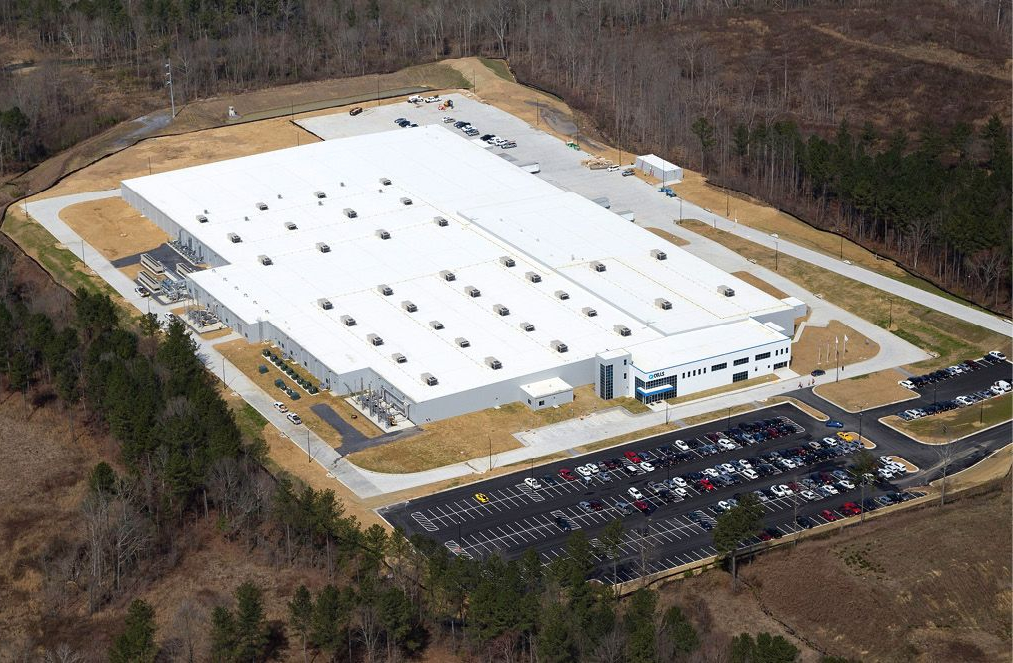
Vikram Solar now has an annual nameplate module production capacity of 9.5GW. Image: Vikram Solar.
Indian solar PV manufacturer Vikram Solar has started commercial operations at its 5GW Vallam module manufacturing facility in India.
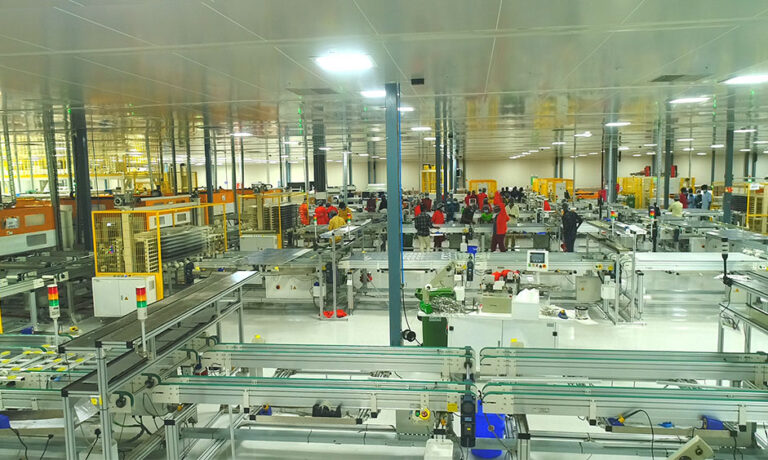
The new facility brings the company’s total nameplate module production up to 9.5GW, and includes a number of technologies Vikram Solar described as “next-generation automation”, including the use of “intelligent robotics” and automated packaging processes. The facility is also capable of producing modules across a range of scales, including M10, G12 and G12R.
This article requires Premium Subscription Basic (FREE) Subscription
Already a subscriber? Sign In
Try Premium for just $1
Full premium access for the first month at only $1
Converts to an annual rate after 30 days unless cancelled
Cancel anytime during the trial period
Premium Benefits
Expert industry analysis and interviews
Digital access to PV Tech Power journal
Exclusive event discounts
Or continue reading this article for free
“Vallam is a defining milestone for Vikram Solar and for India’s solar manufacturing story,” said Gyanesh Chaudhary, Vikram Solar chairman and managing director. “Commissioning this 5GW facility within the year was a bold commitment, and delivering on it signals our readiness for the scale, speed and innovation the next decade demands.”
Vikram Solar also noted that modules produced at the facility would be provided to solar projects in India, across the utility and distributed scales. The news follows a number of module shipment deals signed by the company, including supply deals with AB Energia and L&T Construction in September.
The AB Energia deal includes the company’s tunnel oxide passivated contact (TOPCon) modules, and the Vallam facility will primarily produce modules of this type. However, Vikram Solar noted that the facility has space for “seamless heterojunction technology (HJT) upgrades”, and follows the launch of its first HJT module last year, creating an opportunity for more HJT production in the years to come.
Chaudhary noted that the company’s priorities in the future include “advanced manufacturing, automation-led quality and technology platforms that become new benchmarks for the sector,” and the transition to HJT technology would fall under the latter category.
The news comes as India looks to expand its cell and module manufacturing capacity to solidify its domestic supply of components necessary for the energy transition. Figures from Mercom India show that the country could commission an additional 171GW of solar cell capacity, alongside 279GW of module manufacturing capacity, by the end of the decade.
PV CellTech Global will gather the key stakeholders from PV manufacturing, equipment/materials, policy-making and strategy, capital equipment investment and all interested downstream channels and third-party entities. Join us in Q1 of 2027
Read Next
Chinese manufacturers account for nine of the world’s top ten polysilicon producers, led by Tongwei, GCL Technology and Daqo New Energy.
India has added 11GW of solar PV capacity during the third quarter of 2025, according to a report from the Institute for Energy Economics and Financial Analysis (IEEFA).
Zelestra has signed a PPA with technology giant Microsoft to sell power generated at a 95.7MW solar PV portfolio.
ACME Platinum has signed a PPA with the Solar Energy Corporation of India (SECI) for a 200MW solar-plus storage project in India.
India’s Railway Energy Management Company (REMC) has awarded 1GW of contracts to supply the railway network with round-the-clock (RTC) renewable energy.
ib vogt has entered a strategic partnership with Ingka Investments for a 210MW solar project in Rajasthan, India.
Most Read
Upcoming Events
https://www.pv-tech.org/vikram-solar-starts-work-5gw-topcon-module-manufacturing-facility-india/