

Latest
Features , Interviews , Long Reads
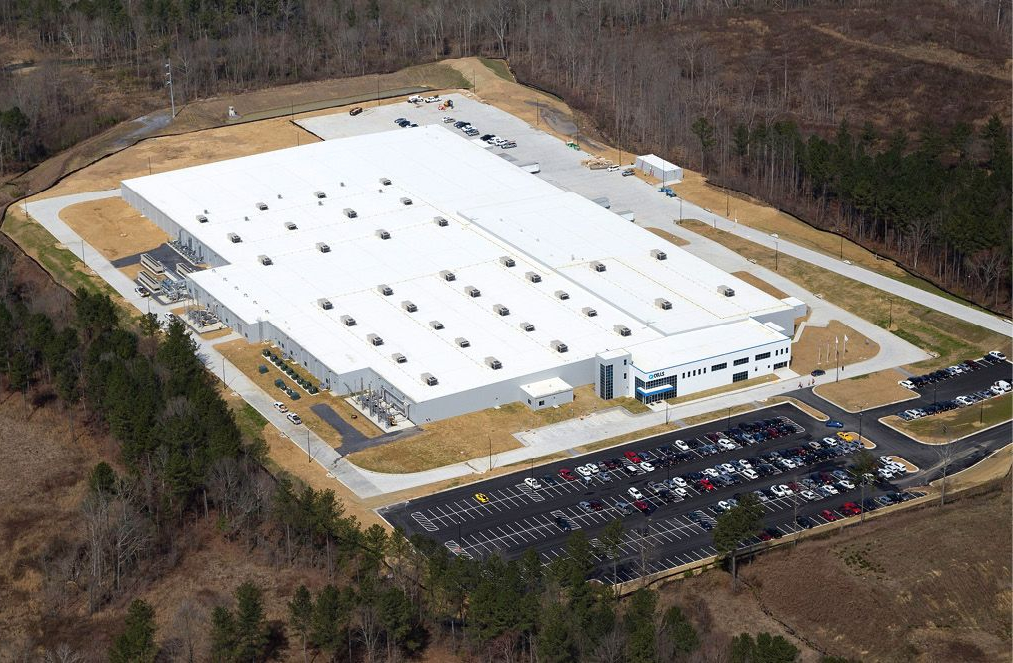
The facility, which is in the Sohar Free Zone of Oman, began construction in March 2024. Image: Sohar Port and Freezone
The World Bank has approved a loan and investment worth up to US$250 million for United Solar’s planned polysilicon production plant in Oman.
The financing, issued by the World Bank’s International Finance Corporation (IFC), comprised a loan of up to US$200 million and a US$50 million equity investment.
This article requires Premium Subscription Basic (FREE) Subscription
Unlock unlimited access for 12 whole months of distinctive global analysis
Photovoltaics International is now included.
Already a subscriber? Sign In
Regular insight and analysis of the industry’s biggest developments
In-depth interviews with the industry’s leading figures
Unlimited digital access to the PV Tech Power journal catalogue
Unlimited digital access to the Photovoltaics International journal catalogue
Access to more than 1,000 technical papers
Discounts on Solar Media’s portfolio of events, in-person and virtual
Or continue reading this article for free
Already a subscriber? Sign In
The facility, which is in the Sohar Free Zone of Oman, began construction in March 2024 and is earmarked to have 100,000MT of annual polysilicon production capacity upon completion. It will be the first polysilicon plant in the Middle East
All in, United Solar said the site will represent around US$1.6 billion in investment. The company secured a US$156 million investment from the Oman sovereign wealth fund in October last year.
According to reports from Reuters, the IFC’s US executive director opposed the investment. Executive directors representing Germany, the Netherlands and Nordic countries abstained from the vote on the financing.
This opposition reportedly stemmed from the company’s exposure to China.
United Solar Polysilicon’s major shareholders are Chinese asset manager IDG Capital, which invested US$158 million in the firm in September 2023, and the company’s founder, Longgen Zhang, who was previously vice chairman of Xinjiang Daqo New Energy, a major Chinese polysilicon producer.
Middle East solar capacity
There have been a number of significant plans for solar manufacturing capacity in the Middle East, often from Chinese or Chinese-backed companies.
In July, Chinese firm Q-Sun announced plans to build a 10GW n-type cell and module facility in Oman; the Saudi Arabian Public Investment Fund (PIF) signed deals with a subsidiary of Chinese solar manufacturer TCL Zhonghuan Renewable Energy to build silicon ingot and wafer manufacturing capacity, and JinkoSolar is intending to build 10GW of cell and module capacity in Saudi Arabia.
Where Chinese money goes in the solar sector, trade issues tend to follow. PV Tech has previously heard from an anonymous analyst that the Middle East could eventually become a target for US import tariffs against Chinese solar products, and plans to limit Chinese dominance of the EU solar supply could also come into play.
Polysilicon overcapacity
The global polysilicon industry is massively oversupplied, almost entirely by Chinese producers.
Polysilicon prices have tumbled in recent years, leading to sustained financial losses for the major Chinese producers, which have rippled down the supply chain.
Currently, rumours are circulating that the Chinese industry plans to buy up and decommission a vast amount of capacity with a US$7 billion fund to redress the supply imbalance and increase prices.
As well as United Solar, US firm Highland Materials is planning to build a new polysilicon facility in Tennessee. The company signed a land lease agreement for the site earlier this week.
San Francisco Bay Area, USA
PV Tech has been running an annual PV CellTech Conference since 2016. PV CellTech USA, on 7-8 October 2025 is our third PV CellTech conference dedicated to the U.S. manufacturing sector. The events in 2023 and 2024 were a sell out success and 2025 will once again gather the key stakeholders from PV manufacturing, equipment/materials, policy-making and strategy, capital equipment investment and all interested downstream channels and third-party entities. The goal is simple: to map out PV manufacturing in the U.S. out to 2030 and beyond.
Large Scale Solar Central and Eastern Europe continues to be the place to leverage a network that has been made over more than 10 years, to build critical partnerships to develop solar projects throughout the region.
Read Next
JP Casey investigates efforts currently being made to standardise the offtake agreement for the renewable power sector.
Over 1.4GW of PV capacity has been allocated in the second round of Romania’s contracts for difference (CfD) programme.
Despite policy setbacks, US manufacturing has come a long way since 2022 and shows strong potential looking ahead. Jonathan Touriño Jacobo looks at the data.
Madrid-headquartered renewables developer Elawan has signed a 10-year power purchase agreement (PPA) to support a 150MW solar PV portfolio in northern Spain.
Juniper Green Energy has secured INR17.39 billion (US$197 million) in debt financing from government-backed Indian Renewable Energy Development Agency (IREDA).
A new MIT study has shown how many of the dramatic reductions in PV costs in the past 50 years were the result of innovations originating outside the solar industry.
Subscribe to Newsletter
Most Read
Upcoming Events
https://www.pv-tech.org/world-bank-loans-us250-million-to-united-solar-oman-polysilicon-plant/