
Latest
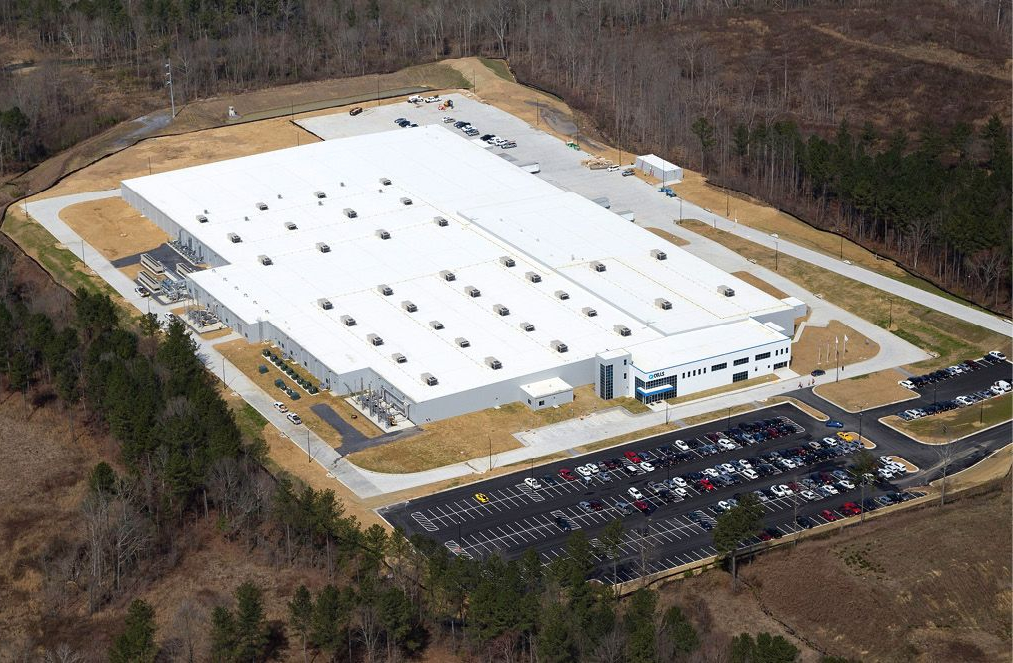
Tongwei and Daqo have a combined polysilicon production capacity of over 1.2 million tons. Image: Daqo New Energy.
Two leading Chinese PV companies, Tongwei Solar and Daqo New Energy, have announced that in order to minimise vicious price competition in the Chinese PV sector, they will reduce and control polysilicon production.
Tongwei stated that as China’s southwest region now enters the dry season in winter, power prices are rising month on month, at the same time that many industry leaders are slashing module prices. .
This article requires Premium Subscription Basic (FREE) Subscription
Unlock unlimited access for 12 whole months of distinctive global analysis
Photovoltaics International is now included.
Regular insight and analysis of the industry’s biggest developments
In-depth interviews with the industry’s leading figures
Unlimited digital access to the PV Tech Power journal catalogue
Unlimited digital access to the Photovoltaics International journal catalogue
Access to more than 1,000 technical papers
Discounts on Solar Media’s portfolio of events, in-person and virtual
Or continue reading this article for free
On 25 December, the Sichuan Yongxiang Company, a key Tongwei subsidiary with an annual polysilicon production capacity of more than 900,000 tons, instructed its own subsidiary high-purity polysilicon companies to carry out technical modification and maintenance according to the company’s overall production and operation plan, and to reduce and control production in an orderly manner on a phased basis.
These subsidiaries include the Yunnan Tongwei High-Purity Crystalline Silicon Company, the Sichuan Yongxiang Polysilicon Company, the Sichuan Yongxiang New Energy Company and the Sichuan Yongxiang Energy Technology Company.
Tongwei also said that in the current market, technical upgrades and a reduction in maintenance and production will help the company to reduce the operating loss of high-purity crystalline silicon (c-Si) business, which is expected to have a positive impact on the company’s overall operation and profits.
More than 1.2 million tons of production could be affected
At the same time, Daqo also issued a production cut notice. The company is one of the major market participants in the polysilicon industry, with two major production bases in Shihezi, Xinjiang and Baotou, Inner Mongolia. It has formed an annual capacity of 305,000 tons of high-quality, low-consumption and low-cost polysilicon.
Daqo Energy stated that at present, the supply-demand imbalance of the polysilicon market has not been fundamentally improved, and the industry as a whole continues to face severe challenges of widespread losses. Regarding this, Daqo will begin phased maintenance of high-purity polysilicon production lines in Xinjiang and Inner Mongolia, and look to reduce and control the output of some production lines.
While the companies have not published figures on expected production cuts, the fact that they boast a combined polysilicon production capacity of over 1.2 million tons means these cuts could have a significant impact on the industry. It remains to be seen as to whether other polysilicon companies will join them in making production cuts.
According to data disclosed by the China PV Industry Association (CPIA), from January to October 2024, polysilicon, wafer, cell and module prices in China have declined by more than 35%, 45% and 25% respectively. This has led to a reduction in the output value of the entire PV manufacturing sector.
On 21 November, China’s Ministry of Industry and Information Technology issued the ‘Standardized Conditions for PV Manufacturing Industry (2024 Edition)’ guidelines to further regulate the management of the PV manufacturing industry.
Encouraging intensive and clustered development, these guidelines explicitly encourage local governments to plan PV manufacturing projects according to local resources and industrial foundations. It also guides PV companies to reduce the number of PV manufacturing projects built for the sole purpose of capacity expansion, offering guidelines on how to strengthen technology innovation, improve product quality and reduce production costs. For new and expanded PV manufacturing projects, the minimum capital contribution ratio is set at 30%.
Earlier this year, a number of leaders called for an end to the “vicious price competition” that has dominated the Chinese PV industry, and dozens of PV companies signed a self-discipline convention to implement pricing and production cut strategies, including setting a cost baseline for export price and domestic bidding price, and fixing price through quotas.
FREE WEBINAR – Ahead of PV Tech’s flagship manufacturing event, PV CellTech, taking place in Frankfurt, Germany on 11-12 March 2025, this special webinar will evaluate the prospects for manufacturing wafers, cells and modules in Europe. What is stopping investments? Where are the green shoots likely to come from? How can the European PV sector successfully galvanise its established know-how in research and production equipment availability?
The webinar will feature contributions from some of the most promising manufacturing developments in Europe today, in addition to expert analysis and perspectives from the U.S. and what is needed to be put in place to stimulate new factory investments and manufacturing profitability.
The conference will gather the key stakeholders from PV manufacturing, equipment/materials, policy-making and strategy, capital equipment investment and all interested downstream channels and third-party entities. The goal is simple: to map out PV manufacturing out to 2030 and beyond.
Read Next
PV Tech spoke to Mike Carr, executive director of the Solar Energy Manufacturers for America (SEMA) Coalition, about US solar manufacturing.
Jindal Renewables has selected Waaree Energies to provide engineering, procurement and construction (EPC) services for its 2GW solar PV plant.
Yang Bao, Trina Solar’s global sales and marketing president spoke to PV Tech about the company’s 2024 performance and 2025 expectations.
The demise of SunPower and the ongoing struggles of Maxeon dominated the news in Q3 2024, along with forecasts of a lengthy industry downturn.
As the year comes to an end, PV Tech speaks to Tongwei Solar’s Qiu Xin about the company’s performance in 2024, and its plans for 2025.
PV Tech looks back at Q2 2024, where a number of critical pieces of US legislation had an impact on the country’s solar sector.
Subscribe to Newsletter
Most Read
Features , Editors’ Blog , Long Reads
Upcoming Events
Solar Media Events , Upcoming Webinars
Solar Media Events , Upcoming Webinars
https://www.pv-tech.org/tongwei-solar-daqo-new-energy-polysilicon-production-cuts/