

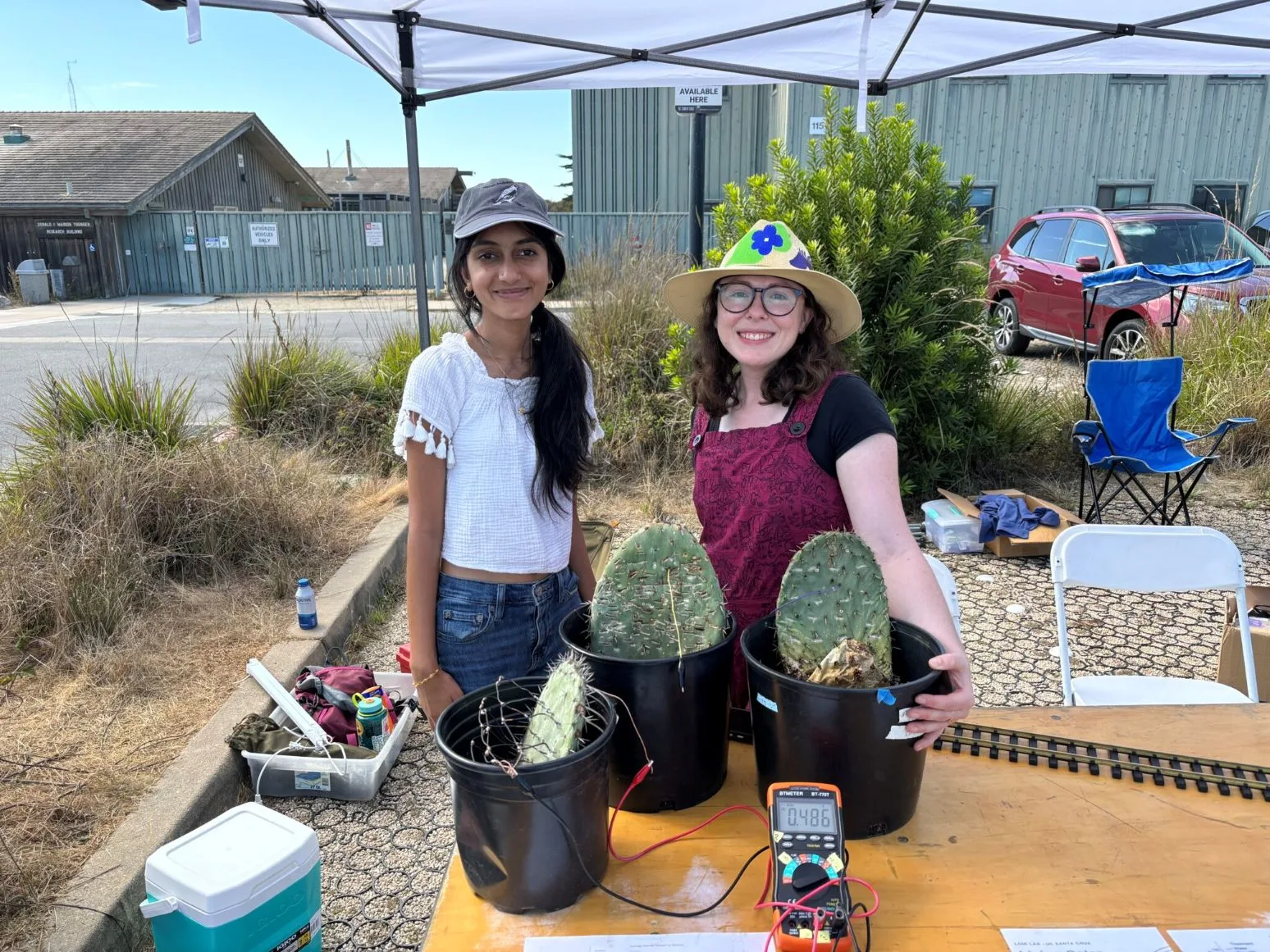
A team of researchers at the University of California, Santa Cruz, has demonstrated an unusual new source of renewable energy: living cacti.
By tapping into the unique biology of prickly pear cacti, the scientists converted the plants into natural power generators capable of producing enough electricity to run low-power agricultural sensors. Their study, published in Plants, People, Planet, shows that the plants can act like biological solar panels while continuing to grow normally.
The idea may sound whimsical, but the science behind it is surprisingly elegant. Most plants use a form of photosynthesis that takes in carbon dioxide during the day. But prickly pear cacti belong to a special group known as CAM plants (Crassulacean Acid Metabolism), which have evolved to survive in hot, dry environments.
To conserve water, these plants open their pores at night instead of during the day. They absorb carbon dioxide in the cool nighttime hours and store it as a compound called malic acid. When daylight returns, the cactus uses the stored malic acid to drive photosynthesis while keeping its pores closed and minimizing water loss. This unusual strategy turned out to have an unexpected electrical consequence.
Plants emit sounds, especially when they are stressed
CAM plants have thick, opaque stems that only carry out photosynthesis in the outer few millimeters of tissue. As sunlight strikes one side of a cactus, malic acid begins breaking down on the illuminated side while remaining more concentrated on the shaded side.
This creates a difference in acidity, or pH gradient, across the plant. That chemical imbalance naturally generates a small electrical voltage. The UC Santa Cruz researchers attached electrodes to the cactus and harvested this voltage directly.
“Just how closely the voltage aligned with the sunlight conditions was really surprising,” said project leader Charlie Chesney, who completed the work as a PhD student in Environmental Studies.
After several years of testing in greenhouses, laboratories, and outdoor plots, the researchers found that individual prickly pear stems could generate up to half a volt of electricity.
That may not sound like much, but the researchers improved the output by linking multiple cactus stems together. Using eight connected stems, the team generated approximately 4.5 volts, about three times the voltage of a standard AA battery.
The electricity isn’t enough to power large devices, but it could be sufficient for small electronic sensors. The researchers envision cactus-generated electricity being used in agriculture.
New way to harvest electricity from succulent plants’ natural photosynthesis
Modern farms increasingly rely on sensors that monitor soil moisture, temperature, crop health, and environmental conditions.
These systems frequently need an electrical source, especially in remote regions. Prickly pear cactus can possibly function as self-sustaining electric generators for low-wattage monitoring systems. The farmers will grow prickly pear cactus with the crops to provide the electrical power for the operation of the sensor network. This will allow them to avoid using traditional electrical power systems that are powered by batteries.
Plants are capable of offering more than just energy. The electrical signal is linked to the plant’s photosynthetic process, so an alteration of the electrical potential (voltage) can reflect either the plant’s condition or the environmental factors affecting it.
“The timing and magnitude of the voltage is a direct reflection of the cactus’s photosynthesis,” explained the researchers.
A cactus could effectively act as both the sensor and the power source, monitoring environmental stress while supplying the energy needed to report it.
How do the plants relax photosynthesis at night?
One of the biggest surprises of this research was found when we subjected cacti to drought conditions. We withheld water from some cacti for 15 months. The plants survived. Some of those that were subjected to drought stress actually had higher electrical potential (voltage) than the ones we watered regularly.
“This was a really surprising result,” Chesney said. “It also showed how resilient a cactus is. It could still produce electricity even when it seems, to us, like it’s near death.”
The finding highlights the extraordinary hardiness that makes cacti attractive candidates for harsh environments where traditional technologies might struggle.
The team also investigated whether nutrient availability affects electricity production. Adding nitrogen, a key fertilizer ingredient, increased the cactus’s stores of malic acid. This extended the photosynthetic period and allowed voltage production to continue later into the day.
In other words, better-fed cacti became better living power sources. The researchers suspect that other CAM plants may possess similar electrical potential. Possible candidates include agave, aloe, pineapple, and dragon fruit.
However, additional testing will be needed to determine which species can safely tolerate the electrodes required to harvest electricity. The project originated as a highly interdisciplinary collaboration involving students from environmental science, engineering, biology, computer science, chemistry, and earth sciences.
Plant communication: A new device can talk to plants
For the team, one of the most rewarding aspects was creating a climate solution that felt imaginative rather than purely technical.
“It was a fun way to explore climate solutions that put creativity first,” Chesney said.
While cactus-powered farms will not replace solar panels anytime soon, this study shows us that biological systems can be used for things we didn’t expect, like producing renewable energy. There are times when the answer to a technology issue isn’t always a new machine. There are times when the solution is just a cactus sitting there under the sun, creating electricity from each photon.
Journal Reference:
Charlie M. Chesney, Joe Zheng, Erin Langness, Angelina Powers, Kai Ando, Ben Walker-Edwards, Sahithi Adiraju, Miles Johnson, Evelyn Cooper, Michael E. Loik. Power harvesting from living solar panels: Crassulacean acid metabolism-related concentration gradients drive cactus-produced electricity. Plants People Planet. DOI: 10.1002/ppp3.70295
https://www.techexplorist.com/cacti-living-solar-panels-generate-electricity/106589/