
Latest
Features , Guest Blog , Long Reads
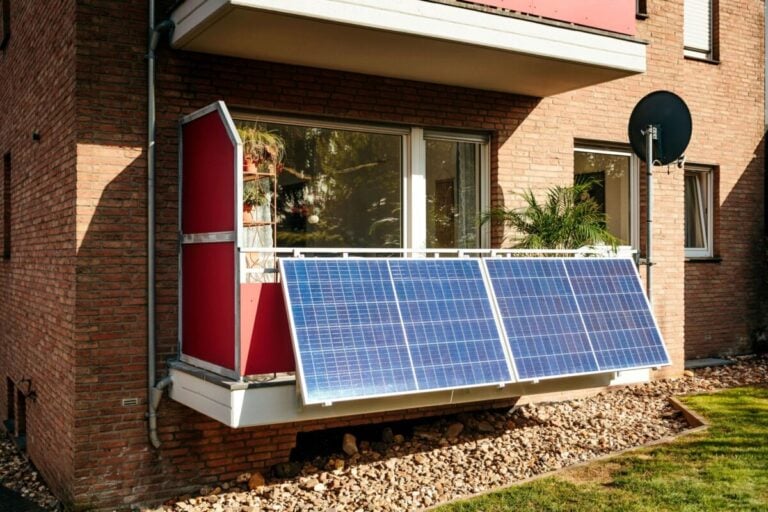
The Plug and Play Solar Act would allow people in California to install small systems of up to 1,200 watts to a building’s electrical system. Image: Yuma Solar via Unsplash.
The California Senate Energy, Utilities and Communications Committee has unanimously voted 14-0 (and 3 abstentions) in favour of a bill for balcony solar.
The new legislation, Senate Bill 868 (SB 868) – also known as the Plug and Play Solar Act – would allow people in California to install small systems of up to 1,200 watts (AC) to a building’s electrical system and exempt them from requiring to interconnect the small systems to the electrical distribution system.
This article requires Premium Subscription Basic (FREE) Subscription
Already a subscriber? Sign In
Try Premium for just $1
Full premium access for the first month at only $1
Converts to an annual rate after 30 days unless cancelled
Cancel anytime during the trial period
Premium Benefits
Expert industry analysis and interviews
Digital access to PV Tech Power journal
Exclusive event discounts
Or continue reading this article for free
Authored by California Senator Scott Wiener, the bill also sets clear safety standards and “clearing away unnecessary utility hurdles” by opening a new low-cost path for families to install solar panels. According to the bill’s analysis, there are around 14 million rental units – representing around 40% of households in the state – that could benefit from this bill and install a balcony solar.
The systems would be required to be certified by Underwriters Laboratories (UL) or an equivalent recognised testing laboratory and automatically shut down in case of a power outage in the grid to avoid any electrical issue.
“Imagine plugging an appliance into a standard wall outlet and instantly lowering your electricity bill,” said Bernadette Del Chiaro, senior vice president for California at Environmental Working Group.
“That’s exactly what balcony solar offers. You place a solar panel on a sunny balcony or patio, connect it to an inverter, plug it in, and start saving. No construction. No complicated installation. And if you move, you can take it with you,” she said.
Currently, only one US state has adopted legislation that authorises the use of plug-in solar without utility approval. Utah’s House Bill 340 was signed into law nearly a year ago and took effect in May 2025, while other states have pending legislation modelled after Utah’s law. However, some states, such as Washington and Arizona, have impeded the progress of similar legislation due to safety concerns.
In Europe, Germany has been the leading market for balcony solar installations since 2024 and had surpassed one million installations in June 2025, according to data from German trade body BSW Solar. Other European countries, such as France, Italy and the Netherlands, are also showing growing interest in these small systems.
More recently, the UK government has moved forward with the approval of plug-in solar for the domestic market and allowing these systems to be sold in supermarkets, as covered by our sister site Solar Power Portal.
More details on SB 868 and its progress can be found here.
PV Tech has been running PV ModuleTech Conferences since 2017. PV ModuleTech USA, on 16-17 June 2026, will be our fifth PV ModulelTech conference dedicated to the U.S. utility scale solar sector. The event will gather the key stakeholders from solar developers, solar asset owners and investors, PV manufacturing, policy-making and and all interested downstream channels and third-party entities. The goal is simple: to map out the PV module supply channels to the U.S. out to 2028 and beyond.
San Francisco Bay Area, USA
PV Tech has been running an annual PV CellTech Conference since 2016. PV CellTech USA, on 13-14 October 2026 is our third PV CellTech conference dedicated to the U.S. manufacturing sector. The events in 2023, 2024 and 2025 were a sell out success and 2026 will once again gather the key stakeholders from PV manufacturing, equipment/materials, policy-making and strategy, capital equipment investment and all interested downstream channels and third-party entities. The goal is simple: to map out PV manufacturing in the U.S. out to 2030 and beyond.
Read Next
US solar developer Avantus and Toyota Tsusho America (TAI) have completed construction at the 159MW Norton Solar Project in Texas.
There is “an emerging and significant compliance risk” for US solar manufacturers and buyers around the origin of solar wafers, according to new analysis from law firm Wiley Rein.
PV manufacturer Canadian Solar’s first US-made solar cells are expected to be produced by the end of March in Jeffersonville, Indiana.
Sunraycer Renewables has broken ground at a portfolio of three solar-plus-storage projects in the US state of Texas.
Origis Energy has commenced operations at its 210MWdc Wheatland utility-scale solar project in Knox County, Indiana.
US corporate clean energy procurement hit a record high in 2025, growing by 12% with the majority of deals for solar PV capacity, according to the Clean Energy Buyers Association (CEBA).
Most Read
Upcoming Events
San Francisco Bay Area, USA
https://www.pv-tech.org/california-moves-ahead-with-balcony-solar-bill/