


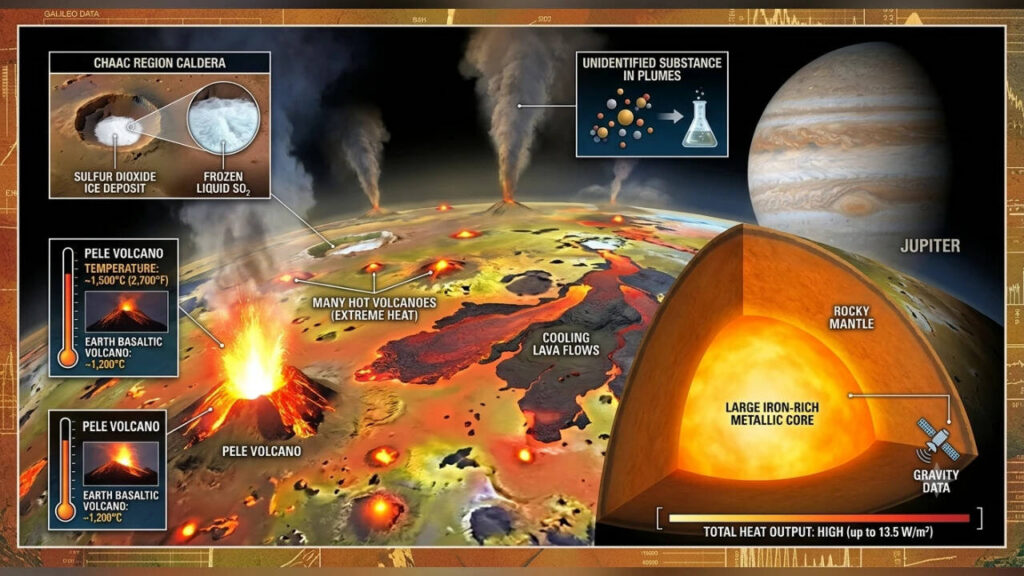
In 2000, NASA’s Galileo spacecraft mapped Jupiter’s moon Io’s volcanoes at temperatures above 1,000°C. 26 years later, the data still reveal one of the solar system’s strangest volcanic worlds
More than two decades after NASA’s Galileo spacecraft flew close to Jupiter’s moon Io, data from those encounters continue to reveal an extraordinary volcanic landscape. During three flybys in late 1999 and early 2000, Galileo’s near-infrared mapping spectrometer detected intense heat and identified different materials across Io’s surface. The instrument measured heat from lava while