
Saturn boasts 146 known moons and counting, with Titan being the largest. Many of these moons exhibit diverse geological features, atmospheres, and even subsurface oceans, akin to planets and dwarf planets in the solar system.
Extensive Moon System
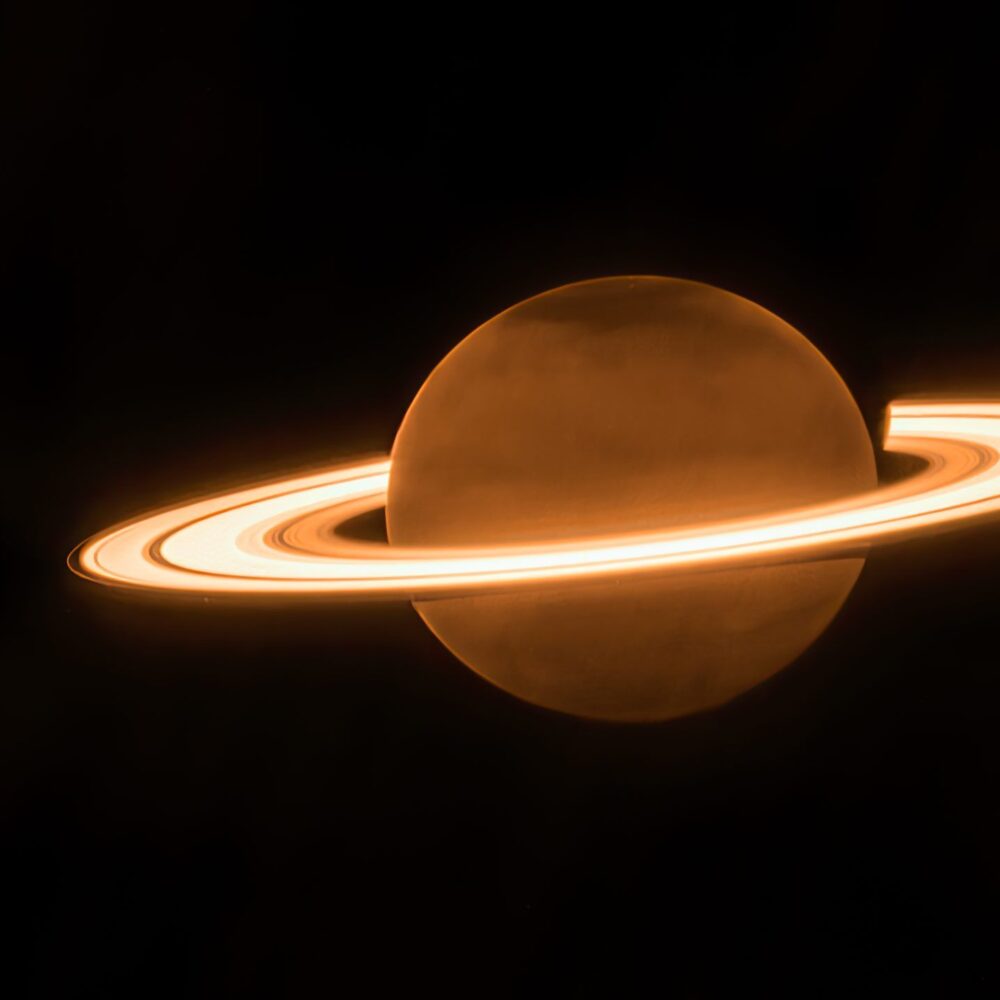
The planet’s iconic rings consist of countless particles of ice and rock, ranging from microscopic grains to house-sized boulders, orbiting Saturn in distinct bands. These rings resemble miniature versions of planetary debris disks found around young stars.
Complex Ring System
Saturn’s strong gravitational pull governs the orbits of its moons and ring particles, much like the Sun controls the motion of planets and other celestial bodies in the solar system.
Gravitational Dominance
Some of Saturn’s moons, like Enceladus and Titan, are active worlds in their own right, with geysers or thick atmospheres. These moons interact with the planet’s rings and magnetosphere, forming intricate subsystems akin to planetary systems.
Unique Dynamics
Saturns moons follow a variety of orbits, from close-in, fast-moving small moons to distant, irregular satellites with retrograde orbits.
Diverse Orbital Patterns
https://www.indiatoday.in/visualstories/science/in-5-pictures-how-saturn-is-a-mini-solar-system-in-itself-199356-02-01-2025?utm_source=rss