

Latest
The deal was signed yesterday (11th November) in Manila. Image: Trinasolar
Chinese solar manufacturing giant Trinasolar has signed a 2GW module supply deal with Philippines renewable energy developer Citicore Renewable Energy Corporation (CREC).
CREC will receive delivery of Trinasolar’s Vertex N 720W Series of n-type tunnel oxide passivated contact (TOPCon) modules, to be deployed in its utility-scale solar projects over the coming years. The two companies signed a 700MW deal in October last year for Trina’s Vertex DE21 modules.
This article requires Premium Subscription Basic (FREE) Subscription
Unlock unlimited access for 12 whole months of distinctive global analysis
Photovoltaics International is now included.
Regular insight and analysis of the industry’s biggest developments
In-depth interviews with the industry’s leading figures
Unlimited digital access to the PV Tech Power journal catalogue
Unlimited digital access to the Photovoltaics International journal catalogue
Access to more than 1,000 technical papers
Discounts on Solar Media’s portfolio of events, in-person and virtual
Or continue reading this article for free
“With our first gigawatt nearing completion, we are now paving the way for our next two gigawatts of solar projects through this newest supply contract with Trinasolar,” said CREC President and CEO Oliver Tan.
The Philippines’ Department of Energy has committed to meeting 35% of its electricity use with renewable energy by 2030 and 50% by 2040. In August this year, the Board of Investments (BOI), an agency attached to the Department of Trade and Industry, accelerated the permitting of a 3.5GW/4.5GWh solar-plus-storage project in the Bulacan and Nueva Ecija provinces.
Last month, Trina announced that it had pushed its i-TOPCon cell, the basis of its Vertex N module series, to 25.9% conversion efficiency. The company claimed this was a new record for a bifacial industrial TOPCon cell.
The company has had an active few months around its technological and manufacturing operations.
Last month, Trinasolar waded into the solar industry’s ongoing TOPCon intellectual property disputes by suing its competitor, Canadian Solar, for alleged TOPCon patent infringement in the US. This followed a filing with the US International Trade Commission (ITC) over products being imported to the US by Chinese competitor Runergy and Indian firm Adani Green Energy.
Sale of US manufacturing assets
However, last week, Trina announced the sale of its 5GW Texas module production facility to battery energy storage manufacturer Freyr Battery. Coming the day after Donald Trump won the US presidential election, the timing of the sale raised eyebrows among industry observers, particularly as it represented a major technological shift for Freyr.
Even prior to the president-elect’s victory – which promises some challenges for the US renewable energy sector – US lawmakers had been seeking to pass a bill excluding Chinese solar manufacturers from US tax credits under the Inflation Reduction Act (IRA).
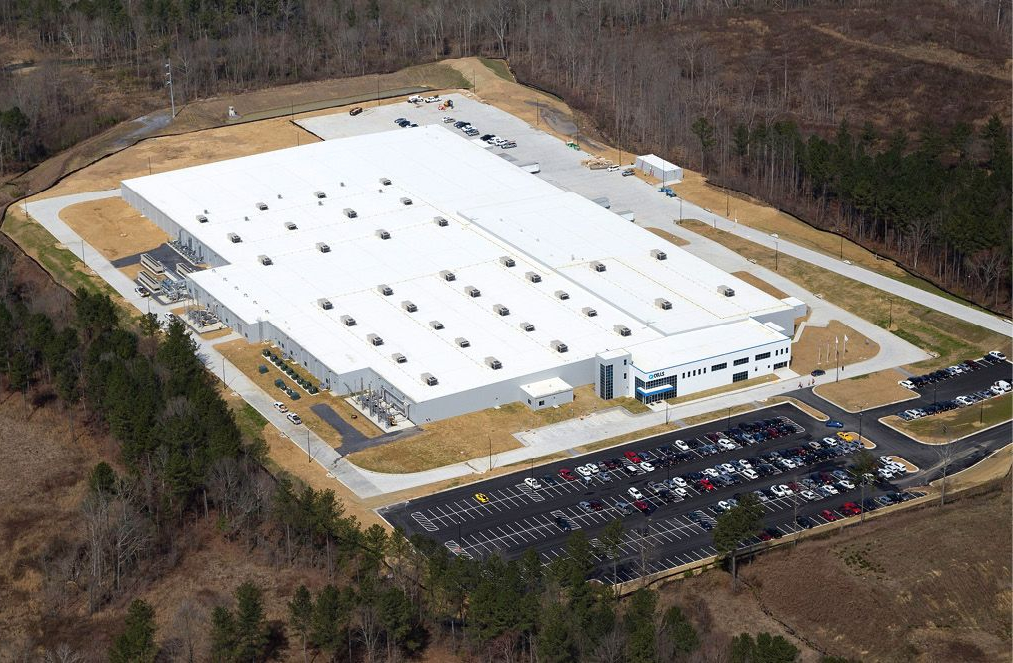
Led by Democrat senators Sherrod Brown and Jon Ossoff, representatives of Ohio and Georgia, respectively, the bill would limit access to the US advanced manufacturing credit for products “produced by foreign entities of concern”. Both Georgia and Ohio have become home to major US-based solar manufacturing projects from Cadmium Telluride (CdTe) thin-film manufacturer First Solar and Korean-owned Hanwha Qcells.
Understanding PV module supply to the European market in 2025. PV ModuleTech Europe 2024 is a two-day conference that tackles these challenges directly, with an agenda that addresses all aspects of module supplier selection; product availability, technology offerings, traceability of supply-chain, factory auditing, module testing and reliability, and company bankability.
The conference will gather the key stakeholders from PV manufacturing, equipment/materials, policy-making and strategy, capital equipment investment and all interested downstream channels and third-party entities. The goal is simple: to map out PV manufacturing out to 2030 and beyond.
PV Tech has been running PV ModuleTech Conferences since 2017. PV ModuleTech USA, on 17-18 June 2025, will be our fourth PV ModulelTech conference dedicated to the U.S. utility scale solar sector. The event will gather the key stakeholders from solar developers, solar asset owners and investors, PV manufacturing, policy-making and and all interested downstream channels and third-party entities. The goal is simple: to map out the PV module supply channels to the U.S. out to 2026 and beyond.
Read Next
Chinese solar manufacturing giant LONGi posted RMB1.26 billion (US$174.8 million) in losses in its Q3 2024 financial results.
Degradation issues identified in new cell technologies such as TOPCon and HJT underscore the importance of module stability as well as efficiency. Tom Kenning reports on the testing of next-generation modules and efforts to ensure their longevity in the field.
The Indian government has imposed preliminary antidumping measures on solar glass producers exporting products from China and Vietnam.
Despite record renewables installations in 2023, notably PV, the global energy transition remains “off track” and geographically imbalanced.
The Global Solar Council announced that it will launch the International Solar Finance Group at the COP29 conference in Baku, Azerbaijan
The New South Wales government has approved plans for a 250MW solar-plus-storage project in Gunning, 260km south-west of Sydney, Australia.
Subscribe to Newsletter
Most Read
Upcoming Events
Solar Media Events , Upcoming Webinars
https://www.pv-tech.org/trinasolar-citicore-in-2gw-philippines-topcon-module-deal/