
Michael Kern
What I Cover
My focus spans the global energy landscape and the technologies reshaping it, specifically focusing on oil and gas, renewables, and tech-driven market…
More Info
Set us as your preferred Google source
Premium Content
By Michael Kern – Jul 18, 2026, 4:00 PM CDT
Microgrids generate, store, and manage their own power, and can disconnect from the utility grid entirely during outages.
Real-world systems, from UC San Diego’s 92 percent self-powered campus to Puerto Rico’s community microgrids, show the technology already works at scale.
AI data centers are now the fastest-growing driver of microgrid demand, with fuel cell deals alone topping $7.65 billion in early 2026.
When Hurricane Maria flattened Puerto Rico’s power grid in 2017, one building in the mountain town of Adjuntas never went dark. Casa Pueblo , a local environmental group, had already wired its headquarters with solar panels and batteries. That system kept the lights on while the rest of the island waited close to a year for power. It also became the seed for one of the country’s most closely watched community microgrids.
Nine years and several storms later, microgrids have moved well past the disaster-recovery story. They’re showing up on military bases, hospital campuses, and increasingly, next to the AI data centers straining power grids from Virginia to Ireland. Here’s what a microgrid actually is, how it works, and why it’s become one of the more important pieces of hardware in the energy transition.
What Is a Microgrid?
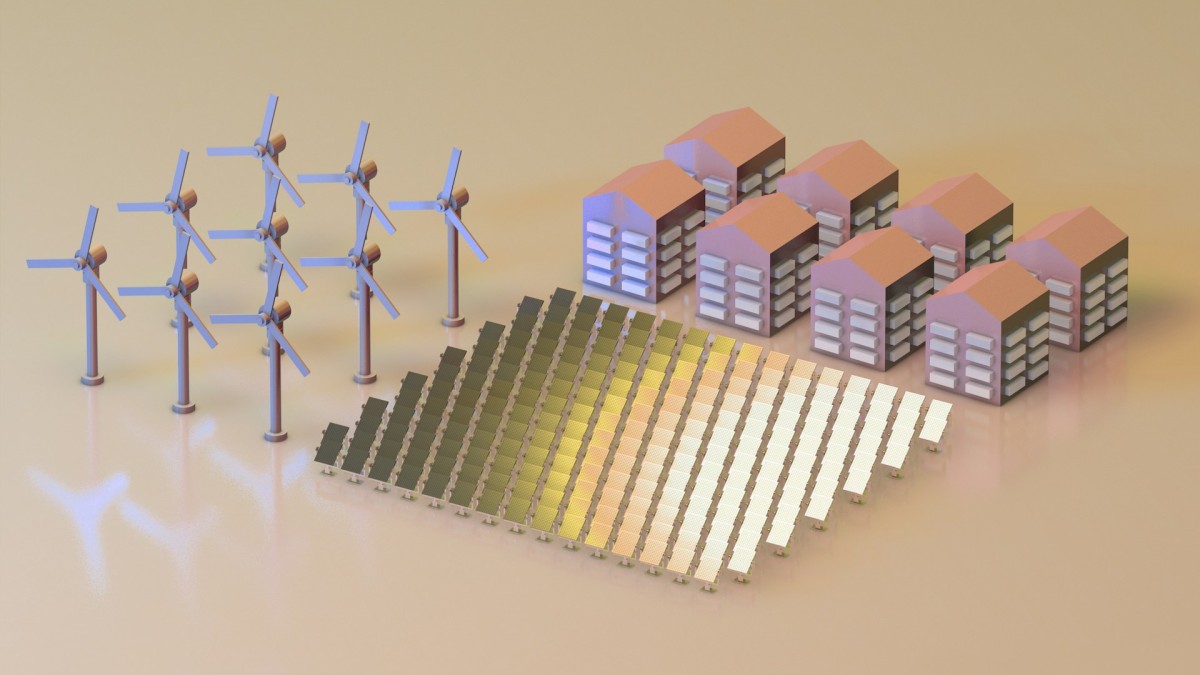
A microgrid is a self-contained power system that generates, stores, and manages its own electricity for a defined area, whether that’s a single building, a military base, or an entire neighborhood. It can run tied to the main utility grid, pulling power when it needs to and selling excess back when it doesn’t. Or it can disconnect entirely and run on its own, a process called islanding.
The U.S. Department of Energy breaks microgrids into four broad categories:
Type
What it serves
Typical setting
Campus/institutional
A single owner’s contiguous facilities
Universities, military bases, airports
Community
Multiple customers within a utility’s territory
Neighborhoods, downtown districts
Remote/off-grid
Isolated areas with no utility connection
Islands, rural villages, mining sites
Resilience
Critical infrastructure needing guaranteed uptime
Hospitals, water treatment plants, emergency services
The common thread across all four: local generation, local control, and the ability to keep the lights on when the wider grid can’t.
How a Microgrid Actually Works
Every microgrid needs three things: a way to make power, a way to store it, and a brain to manage both.
Generation. Most modern microgrids lean on solar PV, though natural gas turbines, diesel generators, combined heat and power (CHP) plants, and increasingly fuel cells all show up depending on the site’s needs and budget. Storage. Batteries smooth out the gap between when power is generated and when it’s needed. A solar-heavy microgrid without storage is only half a system, since it goes dark the moment the sun does. Control. A microgrid controller constantly balances supply and demand, decides when to buy or sell power to the utility, and, if something goes wrong on the main grid, triggers the switch to island mode. That connection point where the microgrid meets the utility is called the point of common coupling , or PCC. When the controller detects instability on the other side of that switch, it opens it and the microgrid keeps running on its own resources, ideally without so much as a flicker for anyone inside. Component
Role
Common examples
Distributed energy resources (DERs)
Generate power on-site
Solar PV, wind, CHP, diesel or gas generators, fuel cells
Energy storage
Bridge the gap between generation and demand
Lithium-ion batteries, flow batteries
Microgrid controller
Balance load, manage the PCC, trigger islanding
Software platforms from Schneider Electric, Siemens, GE Vernova
Point of common coupling
Connects and disconnects from the utility grid
Switchgear, breakers
Why Microgrids Matter
Three forces are pushing microgrids from niche to mainstream: extreme weather, rising electricity costs, and a grid that’s aging faster than it’s being replaced.
At Marine Corps Air Station Miramar in San Diego, Schneider Electric and Black & Veatch built a microgrid combining diesel and natural gas generation, landfill gas, and solar PV that can island more than 100 mission-critical buildings for weeks at a time. NREL later helped the base fold a data center’s backup generator into the same system, giving that one asset double duty. It’s a model the Department of Defense has leaned on across dozens of bases, since a base that loses power loses its mission.
Universities have taken the concept even further. UC San Diego’s microgrid now supplies about 92 percent of the campus’s annual electricity across a 55-megawatt peak load, using a mix of gas turbines, fuel cells, solar, and battery storage, all coordinated by an AI-driven control platform. It’s effectively a small utility hiding inside a college campus, and it’s become one of the most studied microgrid testbeds in the country.
And in Puerto Rico, Casa Pueblo’s Adjuntas microgrid now links solar installations across more than a dozen local businesses, each agreeing to keep serving residents with refrigeration, medicine, and phone charging when the main grid goes down. Oak Ridge National Laboratory is now building software to let clusters of these small systems talk to each other, so a failure in one can be backstopped by its neighbor. On Vieques , a nearby island that went 18 months without grid power after Maria, Cornell researchers are building out a similar independent system this year.
The pattern across all of these: when the centralized grid fails, the places that kept functioning were the ones that didn’t need it to.
Microgrids vs. Smart Grids: What’s the Difference?
The terms get used interchangeably, but they’re not the same thing.
A smart grid is the broader utility network, upgraded with sensors, two-way communication, and automation so operators can see problems in real time, reroute power, and respond to demand spikes without waiting for a customer to call in an outage. It’s still one connected system covering an entire utility territory.
A microgrid is a smaller, self-contained slice of that system that can disconnect and operate independently.
The two aren’t competitors. They’re increasingly built to work together. Smart grid technology, things like advanced metering, demand response signals, and grid-edge sensors, gives utilities the visibility to coordinate with dozens or hundreds of microgrids at once, dispatching them for grid support during peak demand and letting them island automatically during emergencies. A smart grid without microgrids has no local backup when something breaks. A microgrid without smart grid connectivity is just an island, unable to sell power back or receive useful signals from the utility. Together, they start to look like the “system of systems” that groups like IEEE have proposed for storm-prone regions like Puerto Rico: a resilient utility backbone dotted with microgrids that can isolate damage and keep the rest of the network running.
Microgrids in the Age of AI
Nothing has accelerated the microgrid conversation faster than AI’s appetite for electricity.
The numbers are staggering. Global data center electricity use was about 415 terawatt-hours in 2024 and is on pace to roughly double by 2030, according to the International Energy Agency . In parts of Virginia, EPRI projects data centers could account for more than half of all electricity use by 2030. AI racks now pull 50 to 100 kilowatts each, versus 5 to 10 kilowatts for a traditional server rack, and grid interconnection queues in some markets can run five years or longer.
That gap between how fast a data center can be built and how slowly a new transmission line gets approved is why hyperscalers are increasingly building their own power on-site rather than waiting in line. Bloom Energy alone signed $7.65 billion in fuel cell contracts for data centers in the first 90 days of 2026, including a deal with Oracle for up to 2.8 gigawatts of capacity. American Electric Power committed $2.65 billion over 20 years for fuel cell power tied to a Wyoming data center. FuelCell Energy has struck similar deals to serve sites in Virginia, West Virginia, and Kentucky.
Not all of it is fuel cells. Hyperscalers are pairing on-site generation with battery storage, solar, and in some cases small modular reactors, all wrapped in the same microgrid logic that powers a military base or a hospital: generate locally, store what you can, and don’t wait on a grid connection that might not arrive for years. The difference is scale. A hospital microgrid might run a few megawatts. The next generation of AI campuses is being built to demand hundreds.
The Market Is Catching Up
Investment is following the demand. Fortune Business Insights values the global microgrid market at $13.58 billion in 2025, projecting growth to $57.58 billion by 2034, a compound annual growth rate of nearly 18 percent. North America and Asia-Pacific are leading the buildout, driven by grid modernization spending, resilience programs, and rising commercial and industrial demand.
Driver
Why it’s pushing microgrid adoption
Extreme weather
More frequent outages make islanding capability a business necessity, not a luxury
AI and data centers
Grid interconnection delays are pushing operators toward on-site generation
Aging infrastructure
Utilities can’t upgrade transmission fast enough to match new demand
Falling storage costs
Batteries make solar-plus-storage microgrids cost competitive with diesel backup
Getting Started: What Planning a Microgrid Actually Involves
Every microgrid project, whether it’s a 30-megawatt university system or a single fuel cell next to a data center hall, tends to follow the same rough sequence:
Load assessment. Figure out what actually needs power, and how much of it needs to survive an outage versus just run day to day. Resource mix. Decide the generation blend, solar, gas, fuel cells, CHP, based on site, budget, and how long the system needs to run independently. Storage sizing. Size batteries to cover the gap between generation and demand, not just a few minutes of ride-through but the outage duration the site actually needs to plan for. Controls and software. Choose a microgrid controller that can manage islanding, dispatch, and communication with the utility, ideally with room to add AI-based forecasting and optimization later. Interconnection and permitting. Often the longest step. Utility interconnection studies and local permitting can take longer than construction itself, so it’s worth starting early and in parallel with design. Testing and commissioning. Most serious projects run a full islanding test, similar to the Energy Resilience Readiness Exercise the Marine Corps used at Miramar, before calling the system operational. Frequently Asked Questions
What is a microgrid in simple terms?
A microgrid is a small power grid that can generate and manage its own electricity for a specific area, like a campus or neighborhood, and can disconnect from the main utility grid and keep running on its own if needed.
How is a microgrid different from a backup generator?
A generator just kicks on when the power goes out. A microgrid is a full system, generation, storage, and software, that can run continuously, sell power back to the grid, and switch seamlessly between grid-connected and independent operation.
Do microgrids work with solar and battery storage?
Yes, and increasingly that’s the default combination. Solar PV paired with battery storage is now the most common setup for new microgrids, since it cuts fuel costs and emissions compared with diesel or gas-only systems.
Are microgrids and smart grids the same thing?
No. A smart grid is the broader, digitally upgraded utility network. A microgrid is a smaller, self-contained system that can operate independently of that network. They’re designed to complement each other, not replace one another.
Can a microgrid power an entire town?
Yes, community and remote microgrids already do this, particularly on islands and in rural areas without reliable utility access. Puerto Rico’s Adjuntas system and various island microgrids worldwide are built on exactly this model.
Why are AI data centers building microgrids?
Because grid interconnection can take years longer than construction. Rather than wait, operators are pairing data centers with on-site generation, fuel cells, gas turbines, batteries, so power is ready when the building is.
By Michael Kern for Oilprice.com
More Top Reads From Oilprice.com
Oil and Gas Employment Hits a 2026 Low Even as Production Sets Records U.S. Scientists Tap Seawater to Break China’s Rare Earth Monopoly Canada Unveils New Pipeline to Cut Reliance on U.S. Oil Routes
Download The Free Oilprice App Today
Back to homepage
Michael Kern
What I Cover
My focus spans the global energy landscape and the technologies reshaping it, specifically focusing on oil and gas, renewables, and tech-driven market…
More Info
Related posts
Leave a comment
https://oilprice.com/Energy/Energy-General/What-Is-a-Microgrid-How-They-Work-and-Why-Theyre-Suddenly-Everywhere.html