

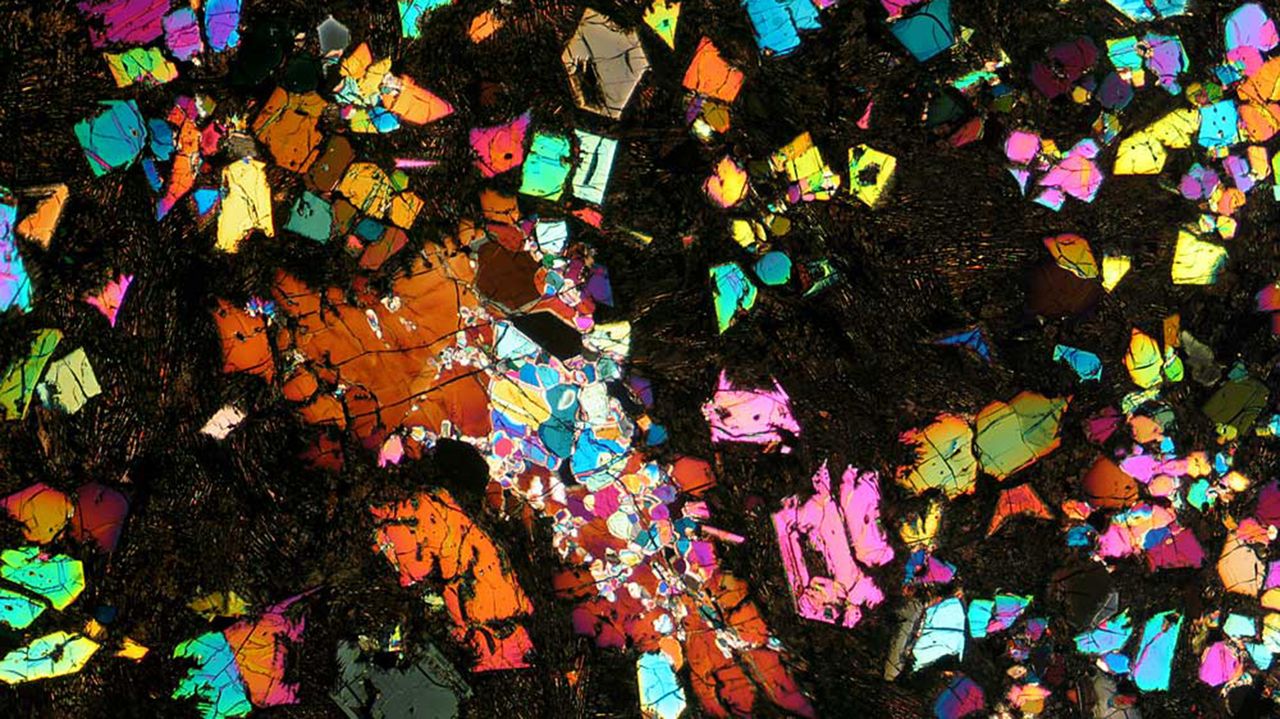
When imaged with cross-polarized light the angrite meteorite NWA 12774 shimmers like a rainbow kaleidoscope. A new study suggests that the space rock, first discovered in 2019, could be a fragment from a long-lost protoplanet from the early solar system.
(Image credit: CU Boulder/John Kashuba)
Quick facts What it is: NWA 12774, a 16-ounce (454 grams) angrite meteorite
Where it was found: The Sahara Desert, Northwest Africa
When it was shared: June 1, 2026
Sign up for the Live Science daily newsletter now
Get the world’s most fascinating discoveries delivered straight to your inbox.
Jamie Carter is a Cardiff, U.K.-based freelance science journalist and a regular contributor to Live Science. He is the author of A Stargazing Program For Beginners and co-author of The Eclipse Effect, and leads international stargazing and eclipse-chasing tours. His work appears regularly in Space.com, Forbes, New Scientist, BBC Sky at Night, Sky & Telescope, and other major science and astronomy publications. He is also the editor of WhenIsTheNextEclipse.com.
You must confirm your public display name before commenting
Please logout and then login again, you will then be prompted to enter your display name.
https://www.livescience.com/space/meteoroids/kaleidoscopic-meteorite-could-be-a-piece-of-a-lost-world-from-the-early-solar-system-space-photo-of-the-week