
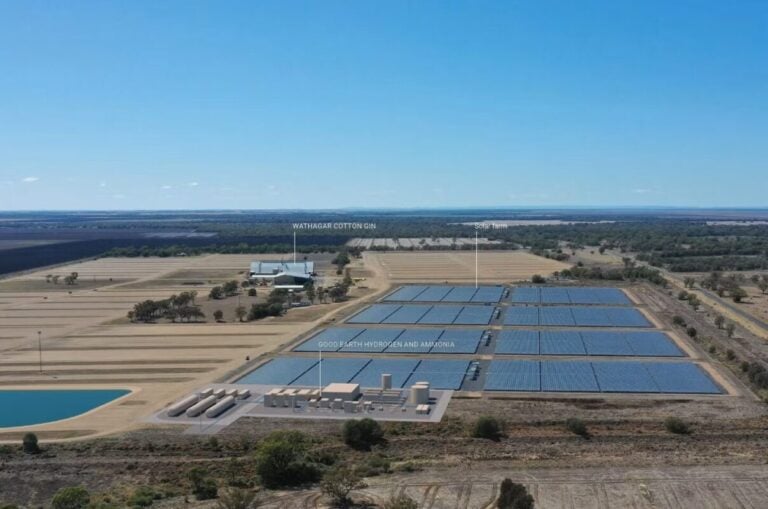
The AU$71.6 million (US$50 million) facility will be powered by an expanded solar installation at the Wathagar Cotton Gin site, approximately 33km southwest of Moree.
The project combines an existing 8.65MW solar PV plant with a new 27MW solar array and a 30MWh battery energy storage system (BESS) to ensure a consistent power supply for the 15MW alkaline electrolysis system.
GEGHA is a joint venture between New Zealand-based Hiringa Energy and Sundown Pastoral Company, with the NSW government committing AU$45.2 million through the Hydrogen Hubs Initiative and Net Zero Manufacturing Initiative.
The project received state development approval in March 2026 and reached financial close in July 2025, with operations expected to begin in early 2027.
The project is designed to address supply chain vulnerabilities exposed by recent volatility in fuel and fertiliser prices. By producing ammonia locally using renewable energy, the facility will replace imported, fossil-fuel-based fertilisers and reduce reliance on diesel for irrigation pumping and heavy-vehicle refuelling across the region.
“Recent fuel and fertiliser supply pressures have highlighted how exposed regional industries remain to volatile international markets, reinforcing the need for greater local energy resilience,” said David Statham, owner of Sundown Pastoral Company.
“Australia is very vulnerable when it comes to imported fuel and fertiliser. Farmers live and breathe those pressures every day.”
Decentralised model contrasts with large-scale project exits
The GEGHA project introduces a decentralised production model that contrasts with recent developments in Australia’s hydrogen sector, where several major players have stepped back from large-scale ambitions.
For example, in October 2024, Origin Energy withdrew from the hydrogen race to focus on renewable energy and storage, while in 2025, oil and gas major bp exited a 26GW wind, solar and green hydrogen project in Western Australia.
Rather than relying on large, centralised facilities and long-distance transportation, the Moree installation will produce ammonia locally for immediate use by surrounding farming operations, reducing both emissions and logistics costs.
The facility incorporates up to 600 tonnes of ammonia storage capacity to buffer against seasonal fertiliser requirements and renewable energy variability.
NSW minister for climate change and energy Penny Sharpe described the project as demonstrating how clean energy investment can deliver benefits for regional communities, industry and farmers.
“The current fuel shock shows why projects like this are so important – they help make farming supply chains more reliable by reducing our need for imported fertilisers,” Sharpe said.
The GEGHA facility represents a practical application of solar PV and wind, forming the foundation of Australia’s National Hydrogen Strategy.
The project is designed to be scalable and repeatable across regional NSW to increase domestic manufacturing and develop energy security through sovereign supply chains for key industries.
https://www.pv-tech.org/construction-begins-on-au72-million-solar-powered-green-hydrogen-hub-in-new-south-wales-australia/