
This variance in module shipments, but sustained performance in cell and wafer shipments, is shown in the graph below. This perhaps reflects a desire in many countries to reduce reliance on imported Chinese modules to improve energy security—which would reduce demand for JinkoSolar’s modules—and an interest in expanding domestic module manufacturing, which would increase demand for cells and wafers, as Chinese manufacturers continue to dominate global production of these components.
The company’s revenues have declined consistently over the last year, from quarterly revenue of RMB24.5 billion (US$3.45 billion) in the third quarter of 2024 to RMB17.9 billion (US$2.52 billion) in the second quarter of 2025 and now RMB16.2 billion (US$2.28 billion) in the third quarter of this year. Indeed, revenue in the first nine months of the year has fallen from RMB71.6 billion last year to RMB47.9 billion this year.
Looking ahead, JinkoSolar expects total shipments between 85-100GW by the end of the year, broadly in line with the company’s 2024 module shipments of 99.6GW.
High-power products and battery deliveries
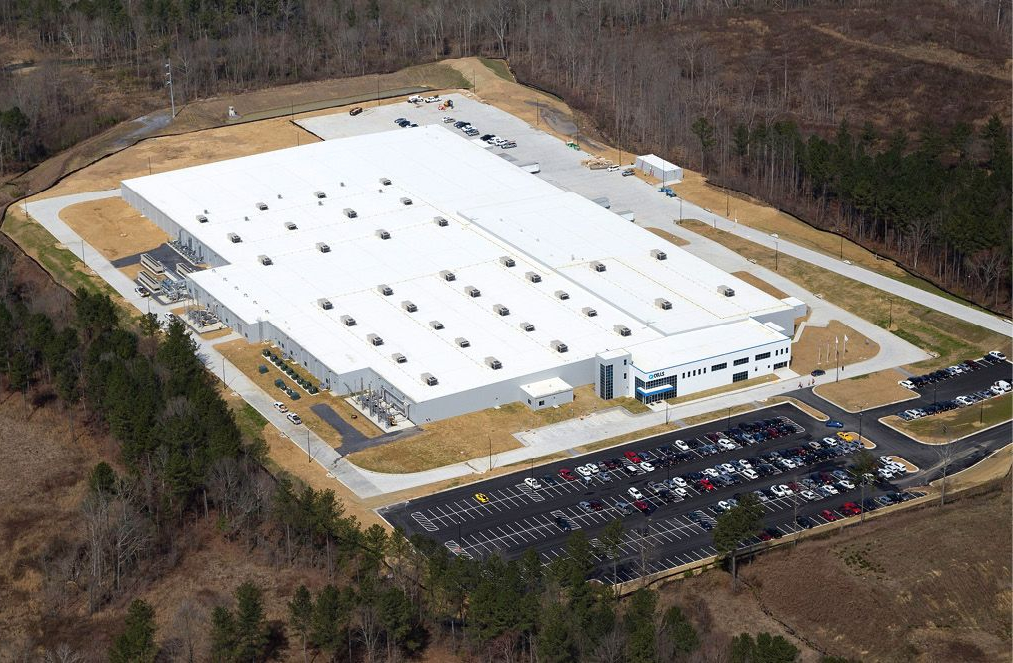
JinkoSolar noted that its shift towards higher-power modules, and battery energy storage systems (BESS), in the last quarter has propped up its financial position.
Gross profit margin reached 7.3% in the third quarter of 2025, a decrease compared to the 15.7% posted in the previous year, but more than double the 2.9% margin reported in the second quarter of 2025.
The company announced that it had started delivery of “certain high efficiency modules” with a power output greater than 640W, which are sold at a higher price than other modules. JinkoSolar has also pushed the conversion efficiency of its mass-produced tunnel oxide passivated contact (TOPCon) modules from 27.2% to 27.4%, and the sale of more powerful, more efficient modules could help the company’s margins recover further.
Similarly, the company shipped 3.3GWh of BESS in the first nine months of the year and expects growth to continue in this area, targeting 6GWh of shipments by the end of the year, and for BESS to become the “second growth engine” in driving the company’s profits in 2026. Earlier this year, JinkoSolar commissioned a 21.6MWh BESS system in the US with Distributed Energy Infrastructure (DEI), and has since delivered energy storage projects in the UK and Romania.
“In China, market-oriented reforms are improving the economics of many energy storage projects while demand is increasing in Europe, Asia Pacific, Middle East and Latin America because of improving economics and the global energy transition,” explained JinkoSolar chairman and CEO Xiande Li.
“In the US, the rapid expansion of AI data centres is straining domestic electricity supply, making solar-plus-storage a safe and easy-to-deploy solution.”
https://www.pv-tech.org/jinkosolar-module-shipments-revenue-fall-q3-2025/