
Latest
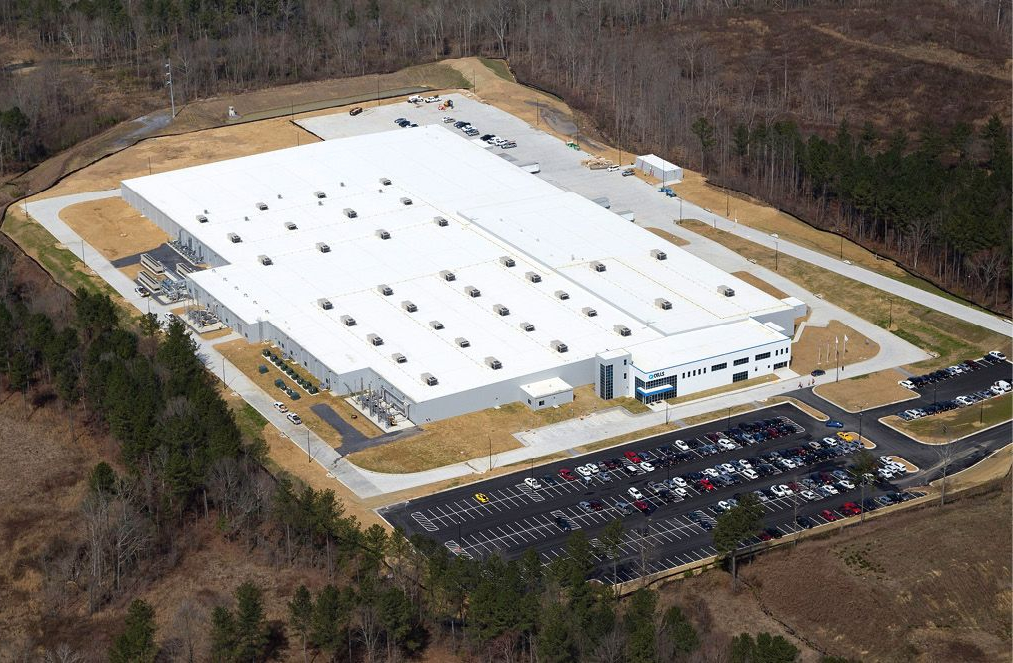
First Solar said it will spend around US$330 million on the new facility, its sixth factory in the US. Image: First Solar.
US solar module manufacturer First Solar will build a new production facility in the state of South Carolina, which will bring its US nameplate manufacturing capacity to 17.7GW by 2027.
The cadmium telluride (CdTe) thin-film module producer announced the new 3.7GW facility last month, where it intends to conduct “final production processes” for its Series 6 Plus modules. In choosing Gaffney, Cherokee County, South Carolina, for the facility’s location, First Solar adds to its existing presence in the state, where it operates a distribution centre in Duncan, Spartanburg County, and the company said it has a “longstanding partnership” with Inland Port Greer.
This article requires Premium Subscription Basic (FREE) Subscription
Already a subscriber? Sign In
Try Premium for just $1
Full premium access for the first month at only $1
Converts to an annual rate after 30 days unless cancelled
Cancel anytime during the trial period
Premium Benefits
Expert industry analysis and interviews
Digital access to PV Tech Power journal
Exclusive event discounts
Or continue reading this article for free
First Solar said it will spend around US$330 million on the new facility, its sixth factory in the US, which will complete module assembly from parts produced at its international manufacturing bases.
The company currently has three US manufacturing facilities in Ohio, one in Alabama and one in Louisiana, as well as research and development (R&D) facilities in Ohio and California. The newest facility, in Louisiana, began production earlier this year.
First Solar’s decision to expand its US manufacturing presence is a direct response to the US government’s trade policies and the passage of the “One, Big, Beautiful Bill” (OBBB) act which set more stringent rules on sourcing renewable energy technologies and components.
“The passage of the One Big Beautiful Bill Act and the Administration’s trade policies boosted demand for American energy technology, requiring a timely, agile response that allows us to meet the moment,” said Mark Widmar, chief executive officer, First Solar. “We expect that this new facility will enable us to serve the US market with technology that is compliant with the Act’s stringent provisions, within timelines that align with our customers’ objectives.”
First Solar said it expects its US production to be “fully compliant” with the new Foreign Entity of Concern (FEOC) restrictions, which were introduced under the OBBB and limit the access of China-based or Chinese-backed companies to the US renewables market. Widmar previously said that the OBBB “strengthens” First Solar’s position in the US market – this is largely due to its use of CdTe technology, which is isolated from the silicon-based supply chain that dictates most of the global industry.
As well as benefitting from greater protectionism by the Trump administration – measures which are likely to cause problems for its silicon-based competitors – First Solar will be pleased with the decision of the US Geological Survey to include tellurium in its list of Critical Minerals.
Categorising tellurium – alongside silicon – as a critical mineral will be grist to the mill of First Solar’s US manufacturing expansion as the mineral is one of the key raw materials in its CdTe technology. Mike Carr, head of the Solar Energy Manufacturers for America (SEMA) coalition, said: “The US leads the world in CdTe innovation and manufacturing, and this continued recognition will help strengthen domestic supply chains for tellurium refining and recovery, supporting growth of American solar manufacturing and innovation”.
PV Tech has been running PV ModuleTech Conferences since 2017. PV ModuleTech USA, on 16-17 June 2026, will be our fifth PV ModulelTech conference dedicated to the U.S. utility scale solar sector. The event will gather the key stakeholders from solar developers, solar asset owners and investors, PV manufacturing, policy-making and and all interested downstream channels and third-party entities. The goal is simple: to map out the PV module supply channels to the U.S. out to 2027 and beyond.
Read Next
Renewable energy developer SunCable has signed an Indigenous Land Use Agreement (ILUA) with the Powell Creek Native Title Holders, marking a milestone for the company’s AAPowerLink project in Australia’s Northern Territory.
Jakson Group has started Phase 1 construction of its 6GW integrated solar ingot, wafer, cell and module manufacturing facility at Maksi, Madhya Pradesh.
India’s race to 500GW is being slowed by critical grid bottlenecks, NTPC PMI’s Abhinav Jindal told PV Tech.
Saatvik Green Energy, through its subsidiary Saatvik Solar Industries, has secured solar PV module orders worth INR1.77 billion (US$19.9 million).
PV Talk: India’s race to 500GW of clean energy is being slowed by critical bottlenecks. NTPC PMI’s deputy general manager Abhinav Jindal tells Shreeyashi Ojha what steps India must urgently take to stay on track with its 2030 targets.
Spain has allocated up to €200 million (US$232 million) to fund “innovative” renewable energy and energy storage projects.
Most Read
Upcoming Events
https://www.pv-tech.org/first-solar-to-build-new-3-7gw-module-facility-in-south-carolina/